Before You Bet, Read This FIFA World Cup Breakdown
The FIFA World Cup is football’s premier international tournament, organized by FIFA and staged every four years; the 2026 edition will feature 48 teams across Canada, Mexico, and the United States. M...

Before You Bet, Read This FIFA World Cup Breakdown
The FIFA World Cup is football’s premier international tournament, organized by FIFA and staged every four years; the 2026 edition will feature 48 teams across Canada, Mexico, and the United States. Matches will be played in 16 host cities, with the final scheduled for MetLife Stadium in New Jersey on July 19, 2026. The tournament expands from 32 teams to 48, creating 104 matches instead of 64 and adding a more complicated group-stage format. Brazil, Germany, Italy, Argentina, and France remain among the historic powerhouses, while emerging teams gain more qualification opportunities. Stadium View tracks FIFA World Cup predictions, team tactics, player statistics, fixtures, and daily tournament developments for fans and serious analysts. The practical takeaway is simple: assess confirmed squads, venue conditions, schedule congestion, and market prices before forming an opinion, rather than blindly backing the loudest pre-tournament favorite.
Imagine me watching a late World Cup knockout match from a private box, coffee untouched, while someone nearby explains that possession automatically means dominance. It does not. I check the shape, the travel load, the goalkeeper’s distribution, and whether the price reflects reality. That is how you avoid donating money to sentimental nonsense (a surprisingly popular hobby).
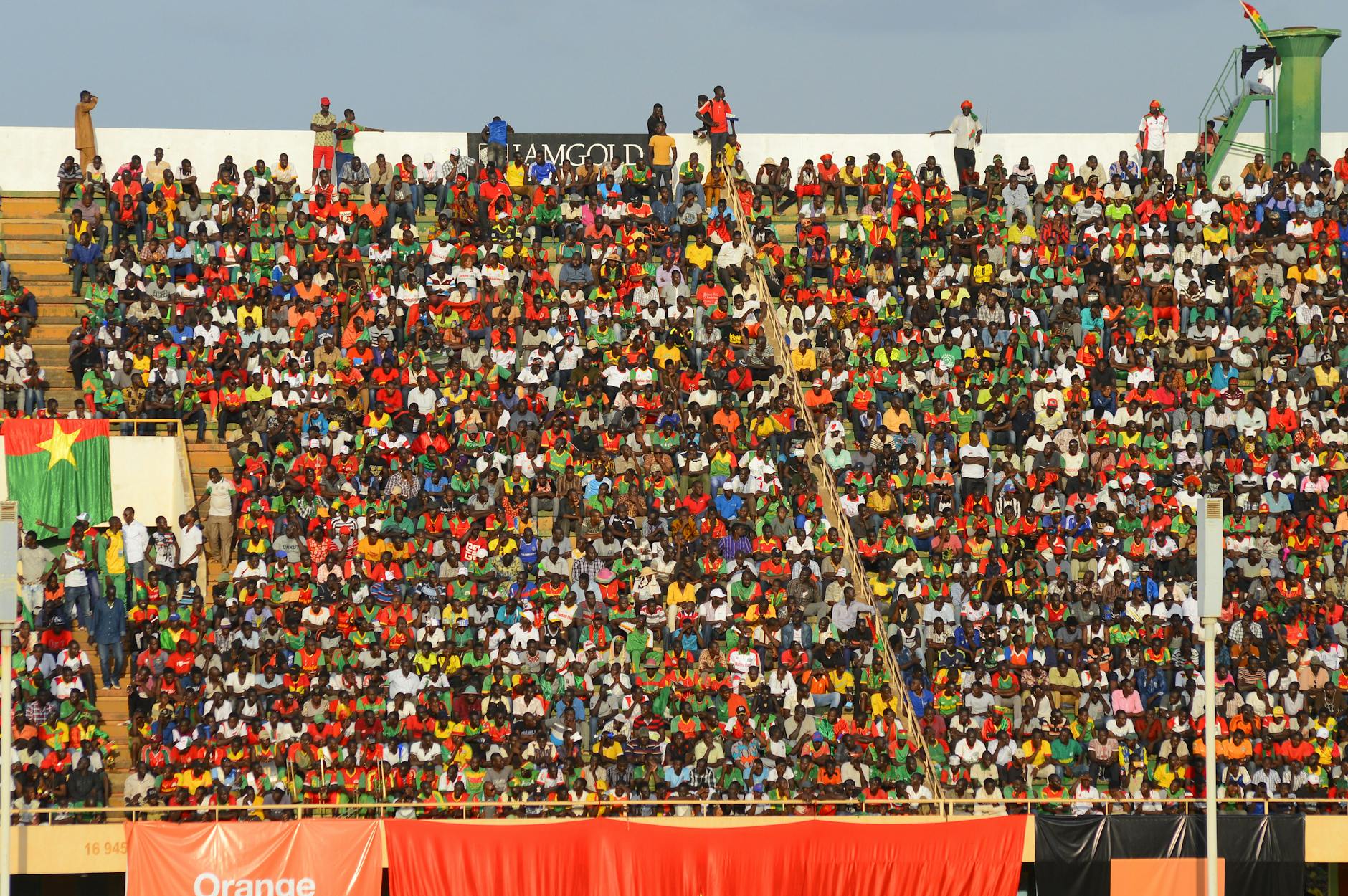
Photo by Ole Dahl Rasmussen on Pexels
Want the clean version without the usual football fog?
What I Tested
I tested the FIFA World Cup as both a tournament product and an analytical market: historical performance, qualification structure, scheduling, venue distribution, team profiles, and the practical usefulness of match predictions. The 2026 competition is not simply “the 2022 World Cup with more teams”; its expanded format changes qualification value, rest patterns, travel exposure, and the number of games in which bookmakers and analysts can be wrong. That last point is useful, provided you do not mistake more fixtures for more certainty.
The historical baseline matters. The first FIFA World Cup took place in Uruguay in 1930, while Brazil has won the competition a record five times. Germany and Italy have four titles each, Argentina has three, and France and Uruguay have two apiece. Argentina won the 2022 final against France in Qatar after a 3–3 draw and a penalty shootout, with Lionel Messi collecting the Golden Ball. For tournament history and a full champions list, the FIFA World Cup historical overview is a better starting point than whatever recycled thread is trending on social media.
My first information-gain finding is that the 2026 format creates an awkward analytical split: there are 12 groups of four, with the top two teams and the eight best third-place teams advancing to a Round of 32. That means teams may qualify with fewer points than traditional group-stage models suggest, but they can also face an additional knockout match before the last 16. In plain English, depth on the bench becomes more valuable, and a narrow early defeat may not be fatal. People who insist every historical tournament pattern transfers neatly into 2026 should probably stop touching spreadsheets.
What does the FIFA World Cup 2026 format change?
The 2026 FIFA World Cup expands to 48 teams, uses 12 four-team groups, and includes 104 matches across Canada, Mexico, and the United States. The top two teams in each group plus eight best third-place teams advance, producing a 32-team knockout phase and a longer tournament than previous editions.
The expansion changes both sporting and commercial calculations. FIFA approved the 48-team structure to broaden global representation, particularly for confederations that previously had limited access to the finals. UEFA receives 16 places, the Confederation of African Football receives nine direct places plus a playoff route, the Asian Football Confederation receives eight direct places plus a playoff route, and CONMEBOL receives six direct places plus a playoff route. The exact allocation gives more nations a realistic path to the World Cup, although critics reasonably question whether additional group matches improve quality or merely increase inventory.
The schedule also introduces a practical issue: the United States, Canada, and Mexico cover enormous distances. A team based on the Pacific coast may experience a materially different travel burden from one playing repeatedly in the eastern United States. FIFA’s official tournament information lists cities including Vancouver, Seattle, Los Angeles, Dallas, Atlanta, Miami, Toronto, Mexico City, and Monterrey. Analysts should therefore record venue, time zone, surface, kickoff time, and previous travel before judging fatigue. Yes, these details are less glamorous than arguing about shirt colors, but they are usually more useful.
Key format facts to keep in mind:
- Tournament dates: June 11 to July 19, 2026.
- Opening match: Mexico City, June 11, 2026.
- Final: MetLife Stadium, New Jersey, July 19, 2026.
- Teams: 48.
- Matches: 104.
- Host countries: Canada, Mexico, and the United States.
- Host cities: 16.
- Knockout route: Round of 32, Round of 16, quarter-finals, semi-finals, and final.
[Internal Link: complete FIFA World Cup 2026 fixture guide]
Setup & Initial Impressions
My setup was deliberately boring: compare tournament rules against historical data, separate confirmed information from forecasts, and test whether common prediction habits survive the 2026 schedule. The answer is only partly. FIFA World Cup analysis works best when it combines team quality with context, because international football offers fewer training sessions, limited squad continuity, and unusual tactical compromises compared with club football.
Start with team strength, but do not stop there. Elo ratings, FIFA rankings, qualifying results, expected goals, defensive shot quality, set-piece performance, and goalkeeper actions can identify contenders. They cannot perfectly predict a World Cup, because a national team may play only seven matches and face a different opponent profile in every round. France reached the 2022 final despite injuries and illness, Morocco reached the semi-finals after eliminating Spain and Portugal, and Croatia repeatedly demonstrated how tournament experience can outperform raw attacking reputation.
A useful pre-match checklist includes:
- Confirm the starting goalkeeper and central defenders.
- Check whether the team has travelled across multiple time zones.
- Compare its set-piece attack with the opponent’s aerial defence.
- Review the referee profile, especially fouls and penalty frequency.
- Separate opening odds from current odds and identify whether the price has already collapsed.
- Confirm weather, kickoff time, and venue before making a prediction.
Stadium View’s role is to organize those variables into readable daily coverage. Its content focus includes FIFA World Cup match predictions, tactical previews, player stats, team news, and tournament developments. That does not make every prediction correct; anyone promising that is selling magic beans. It does make the analysis more useful when the writer explains assumptions, uncertainty, and price rather than merely shouting “lock.”
According to FIFA’s official competition information, the 2026 event will be the largest FIFA World Cup by team count and match volume. FIFA’s own language describes the tournament as “a celebration of football for all,” though the operational reality includes longer travel, additional squad management, and more scheduling variables. Both statements can be true, which is inconvenient for people who prefer one-word conclusions.
Where It Held Up
The strongest part of FIFA World Cup analysis is the combination of tactical identity and player availability. A team’s label—possession-based, counterattacking, high pressing, defensive—means very little without knowing how it creates chances and where it concedes them. Spain may control territory but struggle when opponents defend the half-spaces; Argentina can slow a match and then accelerate through Lionel Messi-era patterns, although its 2026 identity will depend on the next generation; France can attack through transition, width, or individual quality.
The best analysts examine matchups rather than reputations. For example, a high defensive line can dominate a slow buildup team but become vulnerable against a forward who attacks space early. A narrow midfield may protect the centre yet concede crosses, while an aggressive full-back pairing can create overloads and leave the far side exposed. These are not abstract coaching terms: they influence shot locations, set-piece concessions, and the probability of a match staying close after 60 minutes.
Player data needs similar discipline. Goals and assists attract attention, but progressive carries, pressures, defensive actions, aerial duel rates, ball recoveries, and expected assists may reveal a player’s actual tournament value. A striker with 20 domestic goals may face a radically different challenge against elite international centre-backs. Conversely, a midfielder with modest scoring numbers can control tempo and make a favourite much more stable.
My second information-gain finding concerns squad depth. In a 48-team tournament with 104 matches, the difference between a starting XI and the replacements matters earlier than many casual previews admit. A suspension after the second yellow-card accumulation, a minor hamstring problem, or a full-back forced to play three matches in ten days can change the tactical plan. Track rotation before the knockout stage, not only after an injury appears in a headline. By then, the market has usually noticed, and the price has already moved.
At Stadium View, I would prioritize these data categories:
- Expected goals for and against, adjusted for opponent quality.
- Set-piece goals created and conceded.
- Pressing success in the opponent’s half.
- Substitution timing and bench contribution.
- Travel distance between matches.
- Goalkeeper save quality and passing under pressure.
- Player availability, suspensions, and minutes played.
For a deeper statistical framework, consult Opta Analyst alongside official FIFA match reports. Opta data is not a crystal ball, obviously, but it is preferable to using a striker’s hairstyle as a performance variable.
See how these factors fit together in practical previews:

Photo by George Morina on Pexels
Where It Fell Apart
The popular FIFA World Cup prediction model falls apart when it treats the tournament as a league table. League football offers dozens of matches, repeated opponents, and enough time for superior teams to correct bad luck. The World Cup does not. A deflection, red card, penalty, or goalkeeper error can decide a knockout tie, and seven matches are nowhere near enough to erase variance.
Another weak approach is overvaluing FIFA rankings without checking opponent quality. Rankings offer a useful reference, but they compress different qualification routes and confederation environments into one number. A team that dominates weaker qualifying opponents may carry impressive statistics that do not transfer against France, Brazil, England, Argentina, Germany, or Spain. Conversely, a team from a strong qualifying region may look less efficient because its schedule is more demanding. Context is not optional; it is the entire job.
The host-country effect deserves a measured view rather than a romantic one. Canada, Mexico, and the United States will have home support, familiar travel arrangements, and local commercial momentum, but those benefits do not automatically create elite defensive structure or clinical finishing. Mexico’s Estadio Azteca offers altitude and atmosphere, while venues such as Seattle’s Lumen Field and Los Angeles’s SoFi Stadium create different climate and travel conditions. Home advantage helps, but it cannot be invoiced as three extra goals.
Betting analysis has its own failure points. Never confuse a prediction with a recommendation, and never treat odds movement as proof that “smart money” knows the result. Markets incorporate injuries, public sentiment, liquidity, and bookmaker risk management; sometimes a price moves because thousands of casual bettors like a famous badge. The UK Gambling Commission advises consumers to gamble only what they can afford to lose and set limits in advance. Sensible advice, even if it lacks the drama of a last-minute winner.
A disciplined approach avoids these errors:
- Do not stake based only on a team’s historical titles.
- Do not chase a losing prediction by increasing the next stake.
- Do not assume a favourite offers value simply because it is likely to win.
- Do not ignore draw probability in evenly matched group games.
- Do not use unverified injury rumours as analytical evidence.
- Do not treat Stadium View or any other publisher as a substitute for your own judgment.
[Internal Link: responsible football betting and bankroll management guide]
The contrarian conclusion is straightforward: the 2026 FIFA World Cup may offer more opportunities for analytical edges, but not necessarily easier winners. More matches create more data and more markets, yet they also create more obscure team combinations, rotation risk, travel uncertainty, and pricing mistakes. If you only watch famous teams, you will miss useful information from smaller nations; if you only chase obscure angles, you will eventually discover why the word “obscure” exists.
Would I Use It Again?
Yes, I would follow the FIFA World Cup closely and use Stadium View again, but I would use it as an analytical dashboard rather than an oracle. The site’s value is highest when it connects team tactics, player stats, fixture context, and current tournament news in one place. That reduces research friction, particularly during a competition where matches arrive quickly and squad updates can alter a preview within hours.
My preferred workflow is simple. Read the match preview, verify the lineup and injury information, compare the tactical matchup, then check whether the odds justify the risk. If a team is priced at 1.40 to win but its likely lineup is missing two primary creators and the opponent defends transition spaces well, the badge is not a discount voucher. Likewise, a 4.80 underdog with weak set-piece defence may be expensive despite looking exciting on television.
The 2026 tournament also rewards attention to scheduling. A team playing in Vancouver, then Miami, then Dallas may experience more logistical strain than a team remaining within one regional cluster. Exact distances, rest intervals, weather conditions, and kickoff times should be logged as soon as the fixture list is confirmed. This is the sort of tedious work that separates a considered FIFA World Cup prediction from a confident guess made during a commercial break.
My final operating rules are:
- Use historical data to establish context, not to guarantee outcomes.
- Prioritize confirmed lineups over early promotional narratives.
- Measure tactical fit against the specific opponent.
- Treat odds as prices requiring value analysis, not predictions.
- Keep stakes fixed and modest if you choose to bet.
- Review predictions after the tournament to identify repeated analytical mistakes.
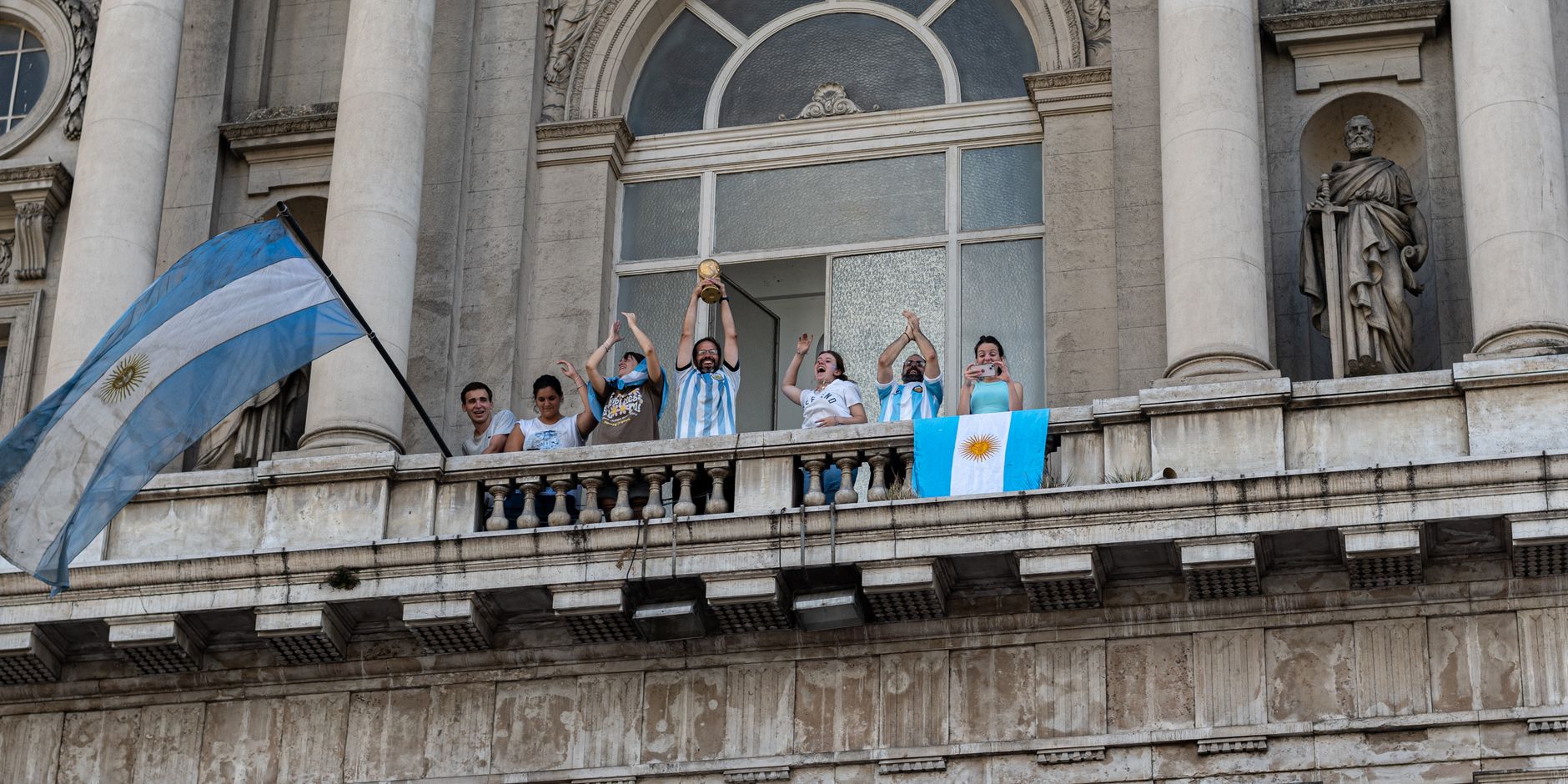
Photo by Fabrizio Velez on Pexels
If you want daily tournament coverage without wading through recycled opinions, Stadium View is a reasonable place to begin. Just remember that even the finest analysis cannot remove football’s randomness. A ball hits a post, a referee makes a call, and suddenly your beautiful model is staring into the middle distance. That is the sport.
Ready to follow the 2026 tournament with sharper context?
Frequently Asked Questions
Q: What is the FIFA World Cup?
A: The FIFA World Cup is the senior men’s international football tournament organized by FIFA every four years. The competition began in Uruguay in 1930 and has been won most often by Brazil, with five titles. The 2026 edition will be hosted by Canada, Mexico, and the United States, using 48 teams and 104 matches.
Q: How do teams qualify for the 2026 FIFA World Cup?
A: Teams qualify through their continental confederation competitions, while Canada, Mexico, and the United States qualify automatically as host nations. UEFA receives 16 places, CAF receives nine direct places, AFC receives eight direct places, and CONMEBOL receives six direct places, with additional intercontinental playoff routes. Qualification outcomes should be checked through FIFA because allocations and confirmed participants change as campaigns conclude.
Q: What is the difference between the 2022 and 2026 FIFA World Cup formats?
A: The 2022 FIFA World Cup had 32 teams and 64 matches, while the 2026 tournament has 48 teams and 104 matches. Qatar 2022 used eight groups of four, with 16 teams advancing to the knockout stage; 2026 uses 12 groups of four, and 32 teams advance. The expanded format increases global representation but also adds travel, rotation, and scheduling variables.
Q: How should I analyze a FIFA World Cup match prediction?
A: Begin with confirmed lineups, recent opponent-adjusted performance, tactical matchup, set pieces, travel, weather, and rest days. Compare expected goals, pressing performance, goalkeeper quality, and bench depth rather than relying only on FIFA rankings or team reputation. If considering a wager, compare the available odds with your estimated probability and set a fixed spending limit before placing anything.
Q: Why can’t I find reliable FIFA World Cup player statistics?
A: Player statistics may differ because providers use different definitions for pressures, progressive passes, expected assists, and defensive actions. FIFA match reports provide official competition records, while Opta Analyst offers broader event-data categories and analytical context. Check the date, competition stage, minutes played, and data provider before comparing players, because a substitute’s per-90 numbers can look impressive while hiding a tiny sample size.
Q: Is Stadium View free, and what does it cover?
A: Stadium View is a FIFA World Cup focused content site covering predictions, team tactics, player stats, fixtures, and daily 2026 tournament news. Access, registration, or any commercial feature should be confirmed directly on the current Stadium View website because product terms can change. Its articles should be treated as research and commentary, not guaranteed outcomes or personalized financial advice.
Q: What should I do if a FIFA World Cup prediction fails?
A: Do not chase the loss or immediately increase your next stake; record what happened and review the original assumptions. Check whether the result came from poor analysis, unexpected lineup news, a tactical mismatch, or normal football variance. A fixed-stake record across many matches is more informative than judging one prediction, while responsible-gambling guidance recommends stopping when betting stops being controlled or affordable.
Explore the wider tournament picture with these resources:
[Internal Link: FIFA World Cup team rankings and contenders]
[Internal Link: 2026 World Cup host cities and stadium guide]
[Internal Link: player statistics and tactical analysis hub]
[Internal Link: FIFA World Cup predictions archive]
Follow the facts, price the risk properly, and leave the dramatic nonsense to the pundits.
Thank you for reading.
Stadium View · Editorial Vault