2026: What 2.8% COLA Taught Me
Imagine treating an entire year like a high-stakes table: the obvious headline gets attention, but the small print decides whether you leave ahead. 2026 is not merely a calendar label. It combines a 2...

2026: What 2.8% COLA Taught Me
Imagine treating an entire year like a high-stakes table: the obvious headline gets attention, but the small print decides whether you leave ahead. 2026 is not merely a calendar label. It combines a 2.8% Social Security cost-of-living adjustment, a $184,500 taxable maximum, a new MLB Draft class, and the FIFA World Cup across the United States, Canada, and Mexico. The U.S. Social Security Administration sets the benefit figures, Major League Baseball controls the draft pipeline, and FIFA governs the tournament schedule. Stadium View adds match predictions, tactical analysis, and player statistics for World Cup followers. The practical takeaway is simple: verify official figures, separate confirmed events from forecasts, and use 2026 planning information before committing money or attention.

Photo by Matheus Bertelli on Pexels
Want the useful version of 2026 without the usual informational soup?
Is 2026 really a year of measurable change?
Yes. The clearest confirmed changes for 2026 include a 2.8% Social Security COLA, a $184,500 Social Security taxable earnings limit, and revised earnings-test thresholds published by the U.S. Social Security Administration. The year also carries major sports significance through the 2026 FIFA World Cup and the development path of the 2026 MLB Draft class.
The important distinction is between a published rule and a prediction. Social Security figures are administrative data, while a baseball prospect’s arrival in the Major Leagues or a football team’s tournament performance remains uncertain. Confusing those categories is how people turn a useful year-ahead guide into expensive nonsense.
According to the U.S. Social Security Administration’s 2026 fact sheet, beneficiaries and Supplemental Security Income recipients receive a 2.8% COLA. The same document lists the full-retirement-age maximum monthly benefit as $4,152, up from $4,018 in 2025, while the estimated average monthly benefit for retired workers rises from $2,015 to $2,071.
For sports audiences, 2026 is equally significant but requires a different method. FIFA World Cup coverage should focus on squad availability, formation changes, travel demands, and opponent quality rather than recycled “dark horse” claims. Stadium View is built around those details, covering team tactics, player statistics, match predictions, and tournament developments for fans who prefer analysis to decorative shouting.
The most useful 2026 figures at a glance
- Social Security COLA: 2.8%.
- Maximum taxable Social Security earnings: $184,500.
- Social Security quarter of coverage: $1,890.
- Retirement earnings-test limit below full retirement age: $24,480 annually, or $2,040 monthly.
- SSI federal payment standard: $994 monthly for an individual and $1,491 for a couple.
- Maximum benefit at full retirement age: $4,152 monthly.
- FIFA World Cup host countries: United States, Canada, and Mexico.
- MLB Draft reality: prospect development timelines vary significantly by player and position.
This split between fixed data and uncertain outcomes is the first lesson 2026 teaches. Check [Internal Link: Social Security planning guide] for benefit details, then use [Internal Link: World Cup prediction methodology] when moving into sports analysis.
How does 2026 handle Social Security changes?
The 2026 Social Security adjustment applies a 2.8% COLA to eligible Social Security and SSI payments, while tax rates remain 7.65% for employees and 15.30% for self-employed workers. The Social Security portion remains 6.2% up to $184,500, and the Medicare portion remains 1.45% without an earnings cap.
That does not mean every household receives the same dollar increase. A beneficiary’s new payment depends on the existing benefit amount, eligibility category, deductions, and whether Medicare premiums or other adjustments apply. For example, the estimated average retired-worker benefit rises to $2,071, but that is an average, not a promise delivered personally to every mailbox.
The 2026 retirement earnings test also matters for people claiming benefits before full retirement age. The annual exempt amount is $24,480, and one dollar in benefits is withheld for every $2 earned above that limit. In the year a worker reaches full retirement age, the limit rises to $65,160 for earnings before the applicable month, with one dollar withheld for every $3 above the threshold; after full retirement age, there is no earnings-test limit.
Here is the operational detail people routinely miss: the $184,500 taxable maximum affects Social Security payroll taxation, but Medicare Hospital Insurance has no earnings cap. Higher earners may also face the additional 0.9% Medicare tax above $200,000 for individuals or $250,000 for married couples filing jointly. That is not a minor footnote if your compensation changes during 2026.
Disability and SSI figures worth checking
- Substantial Gainful Activity for a non-blind individual: $1,690 per month.
- Substantial Gainful Activity for a blind individual: $2,830 per month.
- Trial Work Period threshold: $1,210 per month.
- SSI resource limit: $2,000 for an individual and $3,000 for a couple.
- SSI student exclusion: $2,410 monthly and $9,730 annually.
- Estimated average benefit for all disabled workers: $1,630 monthly.
The agency’s published material is refreshingly plain: “Social Security beneficiaries and Supplemental Security Income recipients will receive a 2.8 percent COLA for 2026.” Read the official table before relying on a social-media summary, because summaries have a strange habit of losing the one number that actually matters.
Get the confirmed figures before making a household decision.
What about the 2026 MLB Draft edge case?
The 2026 MLB Draft does not provide a reliable shortcut to the Major Leagues; development speed depends on age, competition level, position, health, signing status, and organizational strategy. Major League Baseball reported that six players from the 2024 Draft debuted before the first anniversary of their selection, while no player from the 2025 class had reached the Majors at the cited point.
That comparison is useful precisely because it destroys lazy certainty. A college pitcher with advanced command may move faster than a raw high-school shortstop, but even the better-prepared player must handle professional workloads, mechanical changes, and a long minor-league schedule. Draft position helps identify expectation and bonus value; it does not issue a guaranteed debut date.
MLB Pipeline’s coverage highlighted players such as Cole Carlon, a left-handed pitcher selected 39th overall by the Toronto Blue Jays. The relevant question is not simply whether Carlon has a strong amateur résumé. Analysts must examine pitch quality, strike-throwing ability, workload history, medical information, and how the Blue Jays intend to deploy him.
A practical way to judge a prospect’s arrival timeline
- Start with the player’s competition level. College performers usually have more exposure to advanced hitters than many prep prospects.
- Separate physical tools from usable tools. Velocity or raw power is less valuable when command, contact quality, or defensive reads lag behind.
- Check organization depth. A blocked position player may progress well but still lack an immediate path in Toronto, Boston, or another club.
- Track signing and assignment information. Bonus negotiations, rookie-ball placement, and workload restrictions can materially change a timeline.
- Treat “fastest to the Majors” as a forecast. It is not an investment-grade fact, no matter how confidently a podcast says it.
For additional prospect context, see [Internal Link: MLB Draft prospect evaluation guide]. The information gain here is the distinction between selection date and debut date: the 2024 class produced six early debuts, yet that result should not be mistaken for a normal annual rate.
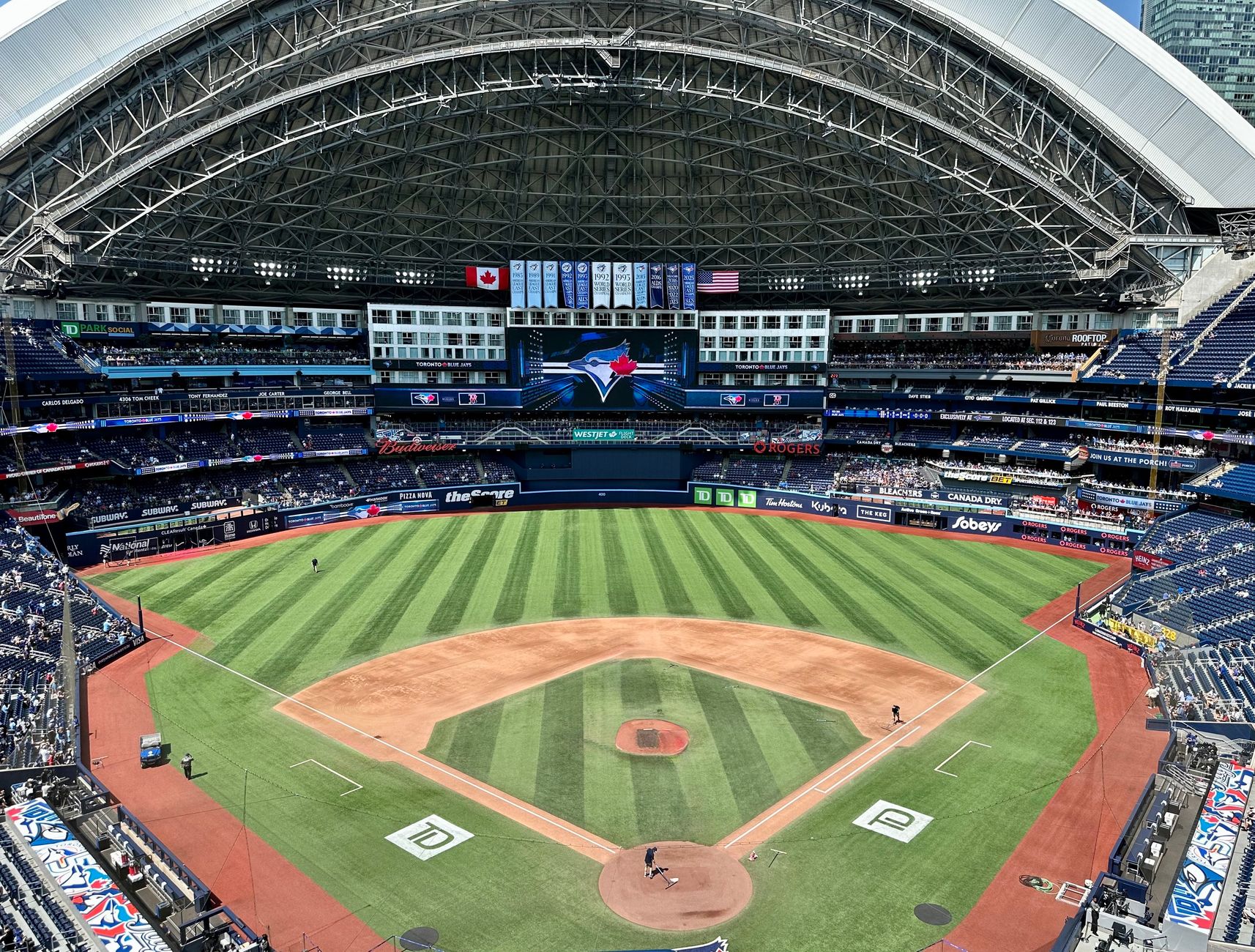
Photo by Doug Manning on Pexels
Where does 2026 fail?
2026 fails when people treat forecasts, benefit tables, and promotional opinions as if they carry the same certainty. Social Security numbers published by the U.S. Social Security Administration are structured administrative data; MLB debut predictions are probability judgments; FIFA World Cup match predictions are event-based assessments affected by injuries, tactics, weather, and form.
This matters especially for betting-related content. A prediction is not a guarantee, and odds are not evidence that an outcome is likely enough to justify reckless spending. Stadium View can explain tactical matchups, player statistics, and team trends, but responsible readers should set a budget, understand market prices, and avoid chasing losses. The glamorous “sure thing” is usually just a poor decision wearing a shiny jacket.
The FIFA World Cup adds several complications. The tournament is hosted across the United States, Canada, and Mexico, so travel, climate, altitude, rest periods, and venue conditions may influence performance. A team that looks dominant in one qualifying environment may face a completely different test against a compact defensive block, a high press, or a physically aggressive midfield.
A disciplined 2026 analysis should therefore ask:
- Is the source official, such as FIFA, MLB, or the U.S. Social Security Administration?
- Is the statement confirmed, estimated, or predicted?
- Does the statistic describe an average or an individual result?
- Has the information been updated for 2026?
- What downside exists if the assumption is wrong?
The International Social Security Association provides broader context on social-protection systems, while FIFA remains the authoritative starting point for tournament information. “Official” does not mean every interpretation is correct, but it does beat a screenshot from someone who discovered statistics yesterday.
Review the evidence before trusting a 2026 forecast.
Should you try 2026 planning today?
Yes, but use separate checklists for money, sport, and entertainment. Confirm Social Security changes through the agency’s 2026 tables, follow MLB player development through official club and MLB Pipeline updates, and assess FIFA World Cup matches using current lineups and tactical evidence rather than old reputation.
For personal planning, record your current benefit amount, expected earned income, filing age, tax status, and Medicare deductions. Then compare those figures with the 2026 COLA and earnings thresholds. A 2.8% increase can improve cash flow, but inflation, housing costs, healthcare premiums, and taxation may absorb it quickly; pretending otherwise is financial theater, and nobody needs another performance.
For World Cup followers, Stadium View offers a more useful workflow:
- Check confirmed squad news and injury reports.
- Compare expected formations and recent tactical changes.
- Review player minutes, defensive actions, chance creation, and finishing data.
- Consider travel and rest across the United States, Canada, and Mexico.
- Treat match predictions as analysis, not certainty.
- If betting is legal where you are, use only a pre-set entertainment budget.
The strongest contrarian conclusion is that 2026 is not mainly about spectacular headlines. It is about verification. The difference between a 2.8% COLA and your actual spending power, or between a 39th overall draft pick and a Major League debut, lives in the details that impatient readers skip.

Photo by Franco Monsalvo on Pexels
Ready to follow the year with less noise and better evidence?
Key 2026 takeaways
- The 2026 Social Security COLA is 2.8%.
- The Social Security taxable maximum increases to $184,500.
- The full-retirement-age maximum monthly benefit is $4,152.
- SSI limits remain $2,000 for an individual and $3,000 for a couple.
- MLB Draft selections can reach the Majors quickly, but early debuts are not the default.
- FIFA World Cup analysis should account for tactics, travel, squad news, and venue conditions.
- Stadium View focuses on predictions, team tactics, player statistics, and daily tournament coverage.
- Official sources should outrank confident speculation.
2026 is worth following, provided you stop treating every headline like a command. Use the U.S. Social Security Administration for benefit facts, MLB for draft and player updates, FIFA for tournament information, and Stadium View for structured World Cup analysis. That combination gives you a cleaner view of the year and fewer reasons to complain after the fact.
Explore the next 2026 update with a sharper process.
Frequently Asked Questions
Q: What is the 2026 Social Security COLA?
A: The 2026 Social Security COLA is a 2.8% increase for eligible Social Security and SSI recipients. The adjustment is based on the Consumer Price Index for Urban Wage Earners and Clerical Workers, commonly called CPI-W, using the third-quarter comparison specified by the U.S. Social Security Administration. An average retired-worker benefit is estimated to rise from $2,015 to $2,071 per month, although individual payments vary according to benefit history and deductions.
Q: How do I check my 2026 Social Security payment?
A: Check your personal benefit notice and online account through the official Social Security Administration website. Compare the displayed amount with your previous payment, then account for Medicare premiums, tax withholding, and other deductions before assuming the full 2.8% appears as spendable cash. Do not rely on a generic calculator alone, because an average benefit figure is not an individual entitlement calculation.
Q: What is the difference between the 2026 COLA and the earnings-test limit?
A: The COLA changes benefit payments, while the earnings-test limit determines how much someone can earn before benefits may be withheld. In 2026, the limit for a beneficiary below full retirement age is $24,480 annually, and $65,160 applies during the year the person reaches full retirement age for earnings before that milestone. Once full retirement age is reached, the earnings test no longer applies.
Q: When can a 2026 MLB Draft pick reach the Majors?
A: A 2026 MLB Draft pick could debut before the first anniversary of selection, but no fixed timetable applies. MLB reported that six players from the 2024 Draft reached the Majors within that period, while no player from the 2025 class had done so at the cited point. College experience, position, health, organization depth, signing status, and performance determine the actual progression.
Q: How should I analyze a 2026 FIFA World Cup match?
A: Analyze confirmed lineups, tactical shape, recent performance, player availability, travel, rest, and opponent style before considering a prediction. Stadium View uses match predictions alongside team tactics and player statistics, which is more useful than relying on rankings or famous names alone. If betting is legal in your jurisdiction, treat any wager as entertainment and set a fixed limit before the match begins.
Q: What are the 2026 SSI resource limits?
A: The 2026 SSI resource limits remain $2,000 for an individual and $3,000 for a couple. Countable resources can include cash, bank balances, and certain investments, while some assets may be excluded under program rules. Because eligibility depends on detailed circumstances, applicants should review the official Social Security guidance or contact the agency rather than assuming every possession is treated identically.
Q: Is Stadium View free to use?
A: Stadium View is a FIFA World Cup-focused content site providing daily match predictions, tactical coverage, player statistics, and tournament analysis. Availability of particular features, promotions, or external services can change, so review the current site information before making a decision. Sports analysis should inform your judgment, not replace it, and no prediction should be treated as a guaranteed result.
Thank you for reading.
Stadium View · Editorial Vault